The holidays bring laughter, delicious food, and bustling kitchens, but they also increase the risk of fires. Cooking is the leading cause of home fires and injuries in the U.S. (National Fire Protection Association [NFPA], 2024; U.S. Fire Administration [USFA], 2024). By following a few simple precautions, you can keep your celebrations safe and stress-free.
Stay Close While Cooking
Most kitchen fires happen when food is left unattended (NFPA, 2024). Even a few minutes away from the stove can lead to trouble. Staying present while cooking allows you to catch problems before they become emergencies.
Tips to stay safe:
- Always stay in the kitchen when frying, broiling, or boiling food.
- If you must step away, turn off the stove and remove anything from hot burners.
- Keep kids and pets at least three feet away from the cooking area.
- Use a timer or smart speaker reminder for simmering or baking dishes.
Protect Against Electrical Fires
Extra appliances in the kitchen can make life easier, but they also pose fire risks if not used carefully. The U.S. Fire Administration recommends unplugging small appliances when not in use (USFA, 2024), and the CPSC notes this simple step as an effective way to avoid accidents (CPSC, 2024).
Electrical safety tips:
- Unplug small appliances when not in use.
- Avoid overloading outlets.
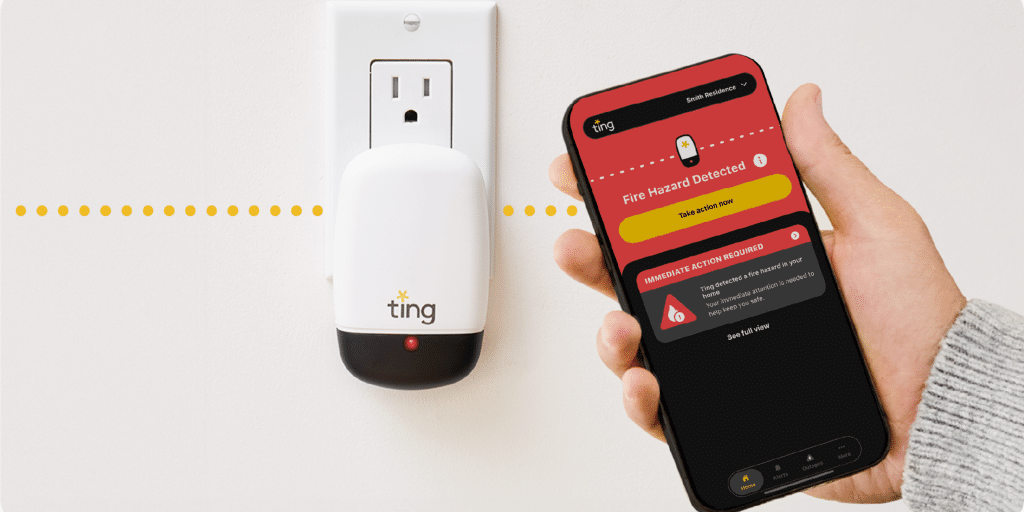
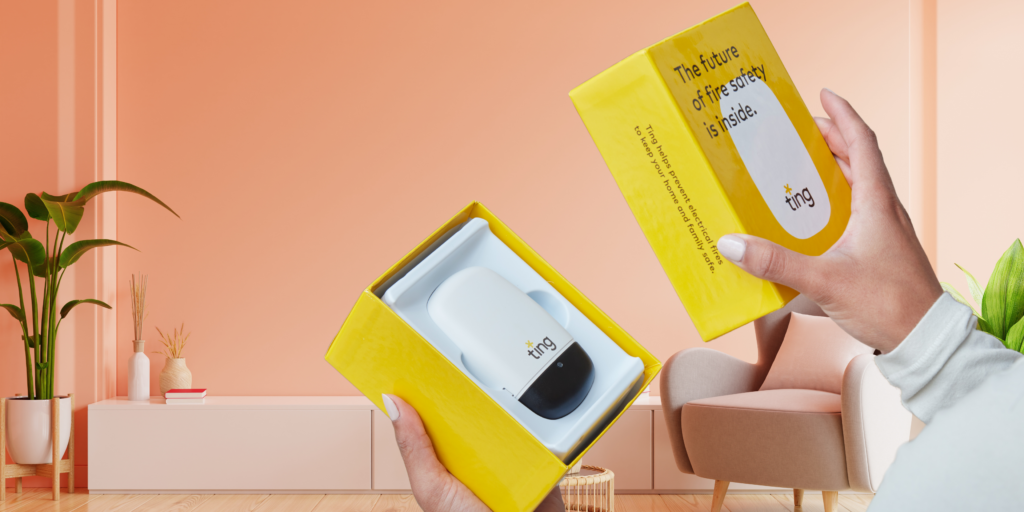
- Keep an extra layer of protection with Ting*.
- Replace frayed or damaged cords immediately.
- Keep cords and outlets clean and dry.
*Ting is a smart sensor and fire prevention service. Learn more here. The smart home monitoring system and related support will be provided by Whisker Labs, the maker of Ting. Bamboo is not responsible for and does not warrant the system, installation, or any home monitoring.
Handle Grease Fires Correctly
Grease fires can escalate quickly, and instinctively using water can make things worse. Knowing how to respond can prevent injuries and major damage.
Grease fire tips:
- Turn off the burner immediately.
- Cover the pan with a lid to smother flames.
- Do not use water or flour.
- Keep the lid in place until the pan has completely cooled.
- Do not try to move the pan while it’s on fire (NFPA, 2024).
Keep Flammables Away and Check Your Burners
Even small items like towels, paper, or packaging can ignite if too close to heat sources. According to NFPA research, materials too close to burners are a leading cause of kitchen fires (NFPA, 2024).
Tips for prevention:
- Keep flammables at least three feet from the stove.
- Turn off all burners and the oven when cooking is finished.
- Turn pot handles inward to avoid accidental spills.
Smoke Alarms Save Lives
Working smoke alarms significantly improve your safety in the event of a home fire. Testing and maintaining them is quick and easy, and helps protect you and your loved ones (National Fire Protection Association (NFPA), 2024).
A helpful bonus: having properly installed, maintained smoke detectors, especially if they’re part of a monitored system, could potentially make you eligible for a discount on your homeowners insurance!
Smoke alarm tips:
- Test alarms monthly and replace batteries yearly.
- Install alarms on every level of your home and near sleeping areas.
- Replace alarms every 10 years.
What to Do If Something Unexpected Happens
Even with precautions, accidents can happen. Having a plan ahead of time helps you stay calm and respond effectively:
- Ensure everyone, including pets, is safe and outside.
- Call 911 immediately for emergency assistance.
- Contact your insurance provider for guidance and support with recovery.
By following these simple tips, you can enjoy cooking, sharing meals, and creating holiday memories without worry. Taking a few minutes to practice safety now can make all the difference later.
References
Consumer Product Safety Commission. (2024). A recipe for safer cooking. Retrieved from https://www.cpsc.gov/safety-education/safety-guides/home-fire/recipe-safer-cooking
National Fire Protection Association. (2024). Cooking safety tips. Retrieved from https://www.nfpa.org/education-and-research/home-fire-safety/cooking
U.S. Fire Administration. (2024). Prevent home fires: Cooking and electrical safety. Retrieved from https://www.usfa.fema.gov/prevention/home-fires/prevent-fires/cooking/ and https://www.usfa.fema.gov/prevention/home-fires/prevent-fires/appliance-and-electrical/
Disclaimer
This information contains general kitchen safety tips based on publicly available information and is provided on as “as is” basis. Bamboo Ide8 Insurance Services makes no representation or warranty of any kind, express or implied, regarding the accuracy, adequacy, validity, reliability, availability, or completeness of the content. The information is for general informational purposes only. It is not a substitute for professional training or official safety guidance. The access and use of this information does not create a professional-client relationship between you and Bamboo Ide8 Insurance Services. Always exercise caution, follow safety instructions provided by manufacturers, and consult professionals for specific situations, questions, concerns, or more information and guidance. Bamboo Ide8 Insurance Services is not liable for any harm or loss resulting from actions or inactions taken based on this content.
While every home is different, the Ting Fire Safety Team frequently encounters the same handful of devices when responding to fire hazard alerts. Many of these are things families plug in — and leave plugged in — every day.
Ting is designed to help catch these hidden dangers by detecting the early warning signs of an electrical fire: micro-arcing. But no system can eliminate every risk. That’s why it’s just as important to recognize the most common devices with risks, and know how to use them safely.
But I have Ting, why do I need this information? Ting (the sensor and service) is statistically proven to prevent ~80% of electrical fires, significantly reducing electrical fire risk in homes. Ting alone cannot eliminate 100% of electrical fire risks. Trust your senses. If something looks, sounds, or smells off, trust your instincts and please contact us immediately.
Here are five everyday devices Ting often identifies as sources of fire hazards, and what you can do to reduce your risk.
1. Dehumidifiers
Dehumidifiers are helpful for managing moisture, but are often used in out-of-sight places like basements, attics, or crawlspaces, making it harder to notice any electrical warning signs. Age, dust buildup, poor airflow, and low-quality components can all contribute to internal electrical failures that spark fires, especially in older units or those running nonstop.
What you can do to help stay safe:
- Check for recalls on your specific model via the CPSC database.
- Only use Energy Star-certified, UL-listed dehumidifiers.
- Place the unit away from walls or drapes to allow airflow.
- Clean the filter and coils regularly based on the manufacturer’s recommendations.
- Avoid running continuously without breaks. Instead, use a timer or humidity sensor.
2. Water Heaters
Water heaters are essential for daily comfort and routines, but they’re rarely top of mind when thinking about electrical safety. Both tank and tankless electric water heaters rely on high voltage connections and heating elements that can fail over time, especially if the unit is aging or wasn’t installed correctly.
Because water heaters are typically tucked away in utility closets, garages, or basements, early warning signs like overheating, scorch marks, or unusual cycling can easily go unnoticed. If corrosion or moisture reaches internal wiring, it can also trigger arcing and increase fire risk.
What you can do to help stay safe:
- Have your water heater inspected regularly by a qualified plumber or electrician.
- Ensure the unit is properly grounded and connected to a dedicated circuit.
- Keep the area around it clear of clutter and flammable items.
- If your heater is over 10–15 years old, watch for signs of wear, including flickering power, breaker trips, or inconsistent water temps.
- Never ignore the smell of burning or buzzing sounds coming from the unit.
3. Air Conditioning Units
Air conditioners draw high power and often run for extended periods during peak heat, which can strain wiring, overload circuits, or reveal aging components. Improper installation, damaged power cords, blocked ventilation, or use with power strips and extension cords can all increase the chance of overheating or electrical arcing.
What you can do to help stay safe:
- Plug window units directly into a grounded wall outlet—never a power strip or extension cord.
- Inspect cords and plugs for damage before each season.
- Make sure central A/C systems are professionally serviced yearly.
- Keep filters clean and vents unobstructed to reduce strain on the system.
- If your unit trips the breaker or emits a burning smell, turn it off and have it inspected immediately.
4. Heating Pads and Electric Blankets
These cozy comfort items can be surprisingly dangerous. Ting regularly detects unsafe electrical arcing from heating pads, electric blankets, and even heated pet beds. Arcing can result from poor manufacturing, aging wires, or damage to the cord, putting loved ones and pets at serious risk.
What you can do to help stay safe:
- Use UL-certified products from trusted brands.
- Always unplug after use, and never leave one of these devices plugged in overnight or unattended.
- Inspect cords frequently for fraying or heat damage.
- Don’t fold, bunch, or place these items under heavy objects.
- Replace every 10 years, even if it still works!
5. Space Heaters
They may be small, but space heaters pack a lot of power. These high-powered devices draw significant electricity and generate intense heat, which can quickly become hazardous if they’re used improperly or show signs of wear.
Many space heater-related fires result from overheating cords, loose plugs, poor-quality components, or placement near flammable materials. Older units are especially risky, and even modern ones with safety features can become dangerous if damaged or misused.
What you can do to help stay safe:
- Plug directly into a wall outlet, never a power strip or extension cord.
- Keep at least 3 feet of space around the heater.
- Never leave it running unattended: always turn it off and unplug it when not in use.
- Choose models with tip-over shutoff and overheat protection.
- Check cords and plugs for damage before each use.
Bonus Tip: What You Plug Into Matters
Even the safest device can become a hazard if it’s plugged into an unsafe outlet or setup.
- Avoid using power strips or extension cords for high-powered appliances like space heaters or dehumidifiers.
- Always make sure the plug fits snugly and securely.
- If a plug is loose, wobbly, or pulling downward due to tension from the cord, it could lead to arcing or overheating (both serious fire risks).
- Replace any outlets that feel loose, warm, or show signs of wear.
- When in doubt, plug directly into the wall and check periodically for damage.
Even everyday devices can pose serious risks when they’re damaged, aging, or used improperly. A little awareness goes a long way in preventing electrical fires. Ting is here to help detect what you can’t see, but staying informed and keeping a close eye on high-risk appliances adds an extra layer of protection for your home and family.
Read Ting’s full blog post here.
Eligible Bamboo policyholders can enroll for their Ting here.*
*This offer is currently only available to eligible policyholders with an active homeowners policy in California placed through Bamboo Insurance, provided the policy is not for a tenant-occupied property and does not have a Difference in Conditions endorsement, while supplies last. This three-year monitoring service is being offered at no charge. Customers will receive one (1) Ting sensor. After the initial three-year service period, Bamboo will communicate any potential updates to the program and the policyholder can choose to pay for additional monitoring services. The smart home monitoring system and related support will be provided by Whisker Labs, the maker of Ting. Bamboo is not responsible for and does not warrant the system, installation, or any home monitoring.
Bamboo Insurance is excited to announce its expansion into the Texas homeowners insurance market. This move marks an important milestone for the company, which has established a strong presence in California’s competitive and challenging insurance environment.
Having withstood California’s volatile insurance market — staying when many other carriers left — this isn’t Bamboo’s first rodeo. As experts in underserved and disrupted markets, the organization’s entry into Texas is embraced by many as a needed source of security and optimism. Bamboo’s commitment to providing stable, personalized home insurance options has allowed it to thrive where others could not. Now, the company is bringing its “here for good” philosophy to Texas homeowners who are looking for a more personal, approachable insurance experience.
“We’ve always believed that insurance should be simple, transparent, and, most importantly, human,” said John Chu, CEO of Bamboo Insurance. “In California, we’ve been there for our customers when others walked away, and we’re proud to bring that same commitment to Texas. We’ve been assessing the current coverage situation in Texas for some time now and are confident we can bring peace of mind and fair coverage to the Texans who need it the most. We’re proud to serve Texas.”
Bamboo Insurance takes pride in offering a personal, customer-first approach that goes beyond just coverage. By focusing on understanding each homeowner’s unique needs, Bamboo ensures that Texans have access to coverage that truly fits their lives. Whether it’s answering a question, offering guidance, or handling claims with care, Bamboo’s team works to build lasting relationships with customers — not just sell them policies.
Read the full press release here.
If you’ve been shopping for homeowners insurance in California, you may have come across a term you’re not familiar with: Excess and Surplus Lines Insurance—also known as E&S insurance. While it’s traditionally been used for high-risk or hard-to-insure properties, a growing number of California homeowners with standard homes are now ending up with E&S policies.
Why? It’s not because their homes necessarily carry a high risk, but because California’s admitted insurance market is volatile with the exit of many traditional insurers. In this blog, we’ll break down what E&S insurance is, why it’s becoming more common in California, and what you need to know as a homeowner navigating today’s evolving insurance market.
What is Excess and Surplus Lines (E&S) Insurance?
Excess and Surplus Lines Insurance is a category of property insurance for homes or risks that admitted insurance companies decline to cover. E&S carriers are considered non-admitted insurers, meaning they operate under specific regulations different from admitted insurers.
Historically, E&S was used to insure unique homes, high-risk properties, or special circumstances—like beachfront mansions, historic homes, or homes in wildfire zones. But now, many homeowners with relatively standard homes are turning to E&S coverage simply because fewer admitted carriers are writing policies in California.
Why Are So Many California Homeowners Being Moved to E&S Insurance?
Over the past few years, California’s home insurance market has been under stress. A combination of rising wildfire risks, climate-related disasters, and insurance regulation challenges has made it difficult for traditional insurance companies (admitted carriers) to offer new homeowners policies.
That’s left thousands of homeowners across the state—many of them with no unusual risks—with no choice but to secure a non-admitted E&S policy.
Common reasons include:
- Limited availability from admitted insurers in certain ZIP codes
- Insurance non-renewals due to wildfire exposure or rising reinsurance costs
- Restricted new business in high-risk or even moderate-risk regions
So even if your home is “standard,” you may still need an E&S policy due to California’s current insurance market conditions.
What’s the Difference Between Admitted and Non-Admitted (E&S) Insurance?
Understanding the difference between admitted vs. non-admitted insurance is key when choosing a policy.
A common misconception is that E&S insurance is “unregulated.” While it’s true that E&S carriers are not subject to the same filing and pricing restrictions, they are still regulated through surplus lines laws and must meet strict financial solvency requirements.
Why Choose an E&S Policy in California?
Given the lack of admitted insurance options, E&S coverage may be your only path to insuring your home—and that’s okay. Today’s E&S policies are often comparable to admitted ones in terms of coverage, especially when arranged by a knowledgeable insurance broker.
Here are some key benefits of E&S homeowners insurance:
- ✅ Access to insurance when admitted carriers are unavailable
- ✅ Customizable coverage for properties with specific needs or higher value
- ✅ Faster policy creation without the delays of state approval requirements
Common Concerns About E&S Home Insurance
If you’re new to the concept of E&S insurance, you might have concerns like:
- “Is E&S insurance safe?”
- Yes. While it’s not backed by a state guaranty fund, reputable E&S carriers must meet financial stability standards and are regulated under state surplus lines laws.
- “What if the E&S insurer goes bankrupt?”
- That’s why it’s important to work with brokers who only partner with financially secure carriers, typically those with strong AM Best ratings.
- “Will my policy be different from a standard one?”
- E&S policies can be very similar to admitted policies in coverage, but they also offer greater flexibility—which can be helpful for homes with unique features or values.
Is E&S Insurance Only for California?
While California is currently facing the most severe challenges in the homeowners insurance market, other states are also beginning to experience similar limitations. For example, Texas is seeing increased demand for E&S options, and future insurance offerings in that state may also be issued on an E&S basis.
That said, this blog is most relevant to California homeowners navigating the shift toward non-admitted coverage.
Need Help Navigating E&S Insurance in California?
Understanding your options can feel overwhelming—especially when you’re trying to protect your home and family. That’s why it’s important to stay informed and work with experts who know the ins and outs of California’s home insurance market. That’s where Bamboo comes in – we’re in California for good with both admitted and non-admitted capacity. Click here to start your California homeowners insurance quote now.
Bamboo Insurance is proud to offer enhanced home safety by providing Whisker Labs’ Ting fire prevention sensors and service for free to eligible customers. Ting helps protect families, pets, and homes from devastating electrical fires by detecting and addressing hidden electrical hazards before they escalate. This year, Bamboo Insurance will provide Ting at no cost to at least 5,000 Bamboo Insurance policyholders, strengthening their commitment to protecting what matters most.
“Providing peace of mind is at the heart of everything we do” said John Chu, Bamboo Insurance CEO. “By offering Ting fire prevention at no cost to our policyholders, we’re taking proactive steps to help prevent home fires before they start. It’s not only a wise business decision, but more importantly, it is an investment the reinforces our commitment to customer safety.”
Ting is an innovative plug-in sensor and fire prevention service that monitors for hidden hazards that lead to electrical fires within a home’s wiring, devices, and utility equipment. If a hazard is detected, Ting alerts the homeowner and leads them through every repair step. Beyond fire prevention, Ting also provides real-time alerts for power outages and even provides assistance for frozen pipe prevention as part of its commitment to helping keep families safe and informed.
Bamboo Insurance is the latest insurer to adopt Ting, joining a fast-growing group embracing this proactive technology to reduce risk and improve customer safety. Ting has a strong track record—preventing 4 out of 5 home fires—and is already protecting over 1 million homes, having helped more than 18,000 customers avoid potentially catastrophic fires.
“We’re thrilled to partner with Bamboo Insurance to bring Ting to even more homes,” shared Bob Marshall, Whisker Labs Co-Founder and CEO. “Our mission is clear: to proactively reduce the risk of home fires and deliver safety alerts that provide real value to homeowners. This partnership not only helps keep families safe but also strengthens the relationship between customers, their insurance providers, and agents by offering a preventative, technology-driven solution.”
To be eligible for this offer, customer must have an active homeowners policy placed through Bamboo Insurance, provided such policy is not for a tenant-occupied property and does not have a Difference in Conditions endorsement. Interested members can check full eligibility requirements and enroll online. Eligible customers will receive a free Ting sensor, the Ting app, 3 years of free fire prevention service, and a $1,000 credit for labor repair costs of Ting-identified hazards.
###
About Bamboo Insurance
Bamboo Insurance is a modern, customer-focused insurance provider dedicated to simplifying the insurance experience. With a technology-driven approach, Bamboo Insurance leverages data and innovative solutions to offer personalized coverage that meets the unique needs of each customer. Committed to transparency and exceptional customer service, Bamboo makes it easy to understand, manage, and customize insurance policies. Through efficient processes and a user-friendly digital platform, Bamboo Insurance is transforming the way people think about and interact with their insurance.
For more information, visit www.bambooinsurance.com.
Bamboo Ide8 Insurance Services (Bamboo) is Managing General Agency licensed to sell property-casualty insurance products; NPN 18657046; CA License #0M31082.
About Whisker Labs
Whisker Labs develops cutting-edge sensor technology to protect families, homes, and communities by predicting and helping prevent electrical fires while also monitoring the resiliency and safety of the U.S. electrical grid. Through a single, DIY sensor plugged into a wall outlet, Ting, Whisker Labs’ flagship solution enables intelligent detection, localization, and mitigation of hazards before they can start a fire. As one of the fastest growing grid IoT networks, Ting is proven to prevent 80% of electrical fires, reducing home fire losses and saving lives across the U.S. every day. For more information, please visit www.whiskerlabs.com. Follow us on LinkedIn, X, Instagram and Facebook.
Choosing the perfect gift can be challenging, but we’ve got you more than covered! Whether it’s for someone new to their property or a long-time resident, the right gift can make a lasting impact by combining thoughtfulness with practicality. This holiday season, let the spirit of “Peace on Earth” translate into peace of mind with gifts that enhance safety, convenience, and comfort at home.
Here are 9 must-have gifts for homeowners that blend function with flair, ensuring a stress-free and secure living environment:
- Smart/Connected Smoke and Carbon Monoxide Detectors ($$)Why we suggest it:
- Instant Notifications: Receive alerts directly to your phone if smoke or carbon monoxide is detected.
- Smart Home Integration: Seamlessly connects with other smart devices.
- Dual Detection: Monitors both smoke and CO2, offering added safety.
- Insurance Benefits: Potential discounts on homeowners insurance.
- Connected Home Security System ($-$$$$)
Why we suggest it:- Crime Deterrence: A visible security system can prevent break-ins.
- Remote Monitoring: Monitor your home from anywhere via your phone or tablet.
- Emergency Assistance: Automatic notifications to medical or police services in case of an emergency.
- Smart Alerts: Receive instant updates on unusual activity.
- Risk Reduction: Early detection of potential threats like fire, break-ins, or even plumbing issues.
- Insurance Benefits: Potential discounts on homeowners insurance.
- Connected Water Sensor with Automatic Water Shut-Off ($$$)
Why we suggest it:- Prevent Property Damage: Detect water leaks early to avoid costly damage.
- Potential Savings: Help reduce water bills by detecting leaks quickly.
- Health Benefits: Prevent mold or mildew growth by stopping leaks at the source.
- Increase Property Value: Smart home features are attractive to potential buyers.
- Insurance Perks: Potential discounts on homeowners insurance.
- Smart/Connected Gas Leak Detector ($-$$)
Why we suggest it:- Instant Notifications: Alerts you to gas leaks, preventing potential danger.
- Precise Leak Location: Identifies the exact spot of the leak.
- Automated Safety: Some models can automatically shut off gas supply in case of a detected leak.
- Smart Home Integration: Works with other devices in your home for comprehensive safety.
- Insurance Perks: Potential discounts on homeowners insurance.
- Smart/Connected Thermostat ($-$$)
Why we suggest it:- Energy Efficiency: Adjusts temperature settings based on occupancy and time of day, helping save on energy costs.
- Remote Control: Manage your home’s temperature from anywhere via your smartphone.
- Risk Reduction: Helps prevent frozen pipes and other temperature-related issues.
- Insurance Perks: Potential discounts on homeowners insurance.
- Surge Protector ($)
Why we suggest it:- Risk Reduction: Protects electronics and appliances from power surges caused by storms or electrical issues.
- Affordable and Effective: A budget-friendly gift with long-term benefits.
- Prevents Damage: Safeguards valuable gadgets and home systems.
- Fireproof Safe ($-$$$$)
Why we suggest it:- Protect Valuables: Keep important documents, jewelry, and other valuable items safe from theft or fire.
- Peace of Mind: Secure storage for everything that matters most, especially in the event of a disaster.
- Variety of Sizes: Choose from small, personal safes or larger options for family heirlooms.
- Connected Video Doorbell ($-$$)
Why we suggest it:- Enhanced Security: View and interact with visitors from anywhere via your smartphone.
- Smart Integration: Pairs with your home security system and other smart devices.
- Remote Monitoring: Receive alerts when someone is at your door, even if you’re not home.
- Insurance Benefits: Potential for discounts on homeowner’s insurance with added security features.
- Smart Door Locks ($-$$)
Why we suggest it:- Increased Security: Keyless entry ensures no one can “pick” your lock.
- Remote Access: Lock or unlock doors from anywhere—great for managing access for guests or service personnel.
- Convenience: Eliminate the need for physical keys, reducing the risk of losing them.
These thoughtful and practical gifts go beyond just making life easier—they enhance the safety and security of a home, reduce risk, and may even lower insurance premiums. Whether you’re gifting to a first-time homeowner or someone who’s been in their home for years, these items are sure to make a lasting impact.
Give the gift of peace of mind this holiday season, and help your loved ones safeguard their homes and everything inside.
Phyn, the leader in intelligent water solutions, today announced that it is joining forces with Bamboo, a property and casualty insurance organization that prioritizes simplicity, transparency, and savings, to protect homes from water-related loss and help address the challenges California residents face in securing dependable homeowners insurance. The partnership offers eligible Bamboo policyholders a 10% discount* on insurance premiums for homeowners who install Phyn Plus and a 15% discount on the Phyn product suite.
In a landscape where California’s insurance market is experiencing unprecedented challenges with many insurers leaving the state, many homeowners face limited options and higher costs. Bamboo has stepped up to ensure Californians can secure reliable and affordable homeowners insurance. Phyn’s solutions protect a home’s plumbing system to prevent leaks and ensure it is watertight while empowering homeowners to conserve and avoid unnecessary water loss.
“With our roots in California, Phyn is proud to partner with Bamboo as they double down on their commitment to the state and continue to offer Californians quality insurance options while empowering them with the tools to protect their homes from unnecessary water damage and reduce water loss,” said Ryan Kim, CEO, Phyn.
“At Bamboo, we’re committed to continually innovating and finding solutions to ensure we deliver an insurance experience that puts our customers first, even in a high-risk environment,” added Brian Suzuki, Bamboo Insurance Chief Insurance Officer. “We’re excited to partner with Phyn to offer its cutting-edge smart water solutions, providing an option to our policyholders that protects their homes from water damage and conserves water, while continuing to be a solid option for Californians struggling to find reasonable coverage.”
As part of the partnership, Bamboo policyholders will get the opportunity to save on their homeowners policy, as well as save 15% on Phyn’s portfolio of smart water solutions including:
- Phyn Plus: Installed on a single location on the main water line, Phyn Plus is a powerful smart water monitor that protects homes from leak damage with unmatched accuracy and reliability and provides detailed insights into water use to help conserve and save. If it detects abnormally high water flow in your home, Phyn Plus will automatically shut off the water to mitigate costly damage.
- Phyn Smart Water Assistant: Self-installed under a sink, the DIY Phyn Smart Water Assistant monitors the water in your entire home to automatically alert you the second a leak is detected, and provide detailed insights into how each fixture in your home uses water.
- Phyn Smart Water Sensor: The puck-sized Phyn Smart Water Sensor is engineered to provide fast, early detection alerts when a leak starts or weather conditions push water into the home. As the first line of defense, the moment water comes in contact with the sensor, a notification is sent directly to your phone, the device starts flashing, and an audible alarm is triggered. When combined with Phyn Plus, it can automatically shut off the water, delivering added convenience and peace of mind.
For more information about the exclusive Phyn discounts available to Bamboo policyholders, please visit here. And explore how Phyn is reducing losses and improving homeowner protection here.
—
Read the full press release here.
As temperatures rise, so do the risks of wildfires. In 2023, the National Interagency Fire Center (NIFC) reported more than 55,000 wildfires burning 2.7 million acres across the United States*. If you live in a wildfire-prone area, being prepared is crucial. Luckily, we have some tips to help you get started.
Here are steps to potentially reduce the spread of flames toward your home:
- Create a defensible space: Establish a clear zone between your home and any nearby grass, trees, shrubs, or wild-land areas. This buffer can significantly slow down or halt the progress of a wildfire.
- Remove potential hazards: Regularly clear debris from your roof, gutters, and yard to minimize fuel for fires.
- Prepare your home: Upgrade your home with features like vulcan vents, gutter guards, and fire-resistant windows and doors to enhance its ability to withstand wildfires.
- Check your landscaping: Maintain well-pruned trees, keep shrubs away from your house, and opt for fire-resistant plants when landscaping around your property.
Additional resources:
- Smoke Exposure Preparedness Guide: Download Here
- Navigating Wildfires: Download Here
- Building Your Emergency Supply Kit: Download Here
- Seasonal Checklist for Fire Prevention: Download Here
Questions about wildfire in relation to your Bamboo homeowners policy? Reach out to your Bamboo Sales Advocate today.
*Source: disasterphilanthropy.org
We know what some of you are thinking – earthquake insurance is one of those unnecessary coverages that you’ll pay for, but probably won’t end up using. We’re here to shake that thinking up (pun intended). If you’re in an area that’s prone to earthquakes or has experienced an earthquake in the past few decades, it’s worth it to look into getting earthquake insurance. Earthquakes can cause intense damage, costing thousands of dollars. In fact, a report conducted in 2023 by the U.S. Geological Survey and FEMA estimates that earthquake damage costs the U.S. $14.7 billion dollars annually – an increase of 140% over the previous estimate from 2017.*
What is earthquake insurance, and what does it cover?
Earthquake insurance is a specialized type of insurance designed specifically for covering the cost and repairs of damage caused by earthquakes (since your standard homeowners won’t). Earthquake insurance coverage ranges from structural damage to your home (e.g., your roof, damaged walls, etc.) to replacement of personal property (e.g., your furniture, appliances, etc.). If you need to find a temporary place to stay, it can also help to cover those expenses. Keep in mind, this isn’t a one-policy-covers-all type of insurance, so make sure you run through the details of exactly what your specific earthquake insurance policy covers with your agent.
Why do I need earthquake insurance? I have a homeowners policy.
Your homeowners policy will cover many things; but one thing it doesn’t cover is damage to your home, structures, and personal property caused by earth movement (i.e., an earthquake). If your home is in an earthquake-prone area, we highly recommend looking into obtaining earthquake insurance. Good news! Our Bamboo Insurance Agency can help with finding options for you.
What factors impact the cost of earthquake insurance?
When obtaining earthquake insurance, your location, the cost of rebuilding your home, and risk tolerance are considered. All these factors impact the cost.
Does my renters insurance cover earthquakes?
Unfortunately, it doesn’t. Renters insurance is great for covering situations like vandalism, theft, fire, and other events; however, it generally doesn’t cause damage directly caused by earthquakes.
Which one is better to have? Homeowners/renters or earthquake?
If you live in an earthquake-prone area, you should look at obtaining both. Let’s say an earthquake causes a fire, and that fire causes damage to your home. In that situation, your homeowners or renters insurance policy would come in for the save. However, if the earthquake directly causes damage to your home, that’s when that earthquake insurance would really come in handy.
Looking to learn more and potentially get earthquake coverage?
Connect with one of our experienced Bamboo Agents ???? Contact Us Page
*Source: temblor.net
Damage to the home caused by water is one of the costliest and most stressful situations homeowners deal with. Even worse? Most homeowners don’t even know they had a leak to start. The impact of water damage can result in way more than just wet floors – like potential mold growth over time, broken pipes, damaged walls, and destruction of your home’s structural integrity. In fact, according to the Insurance Information Institute, approximately 14,000 people nationwide are impacted daily from water damage.
When it comes to a leak, it’s critical to get the leak stopped and water dried up within the first 24 hours to avoid the growth of mold. The good news is that there are options for systems, like an automatic water shut off system, to keep you aware of any leaks in your home that will even shut off your water to prevent excessive damage. Even better? We’ve partnered up with Phyn, a trusted provider of property and water protection systems, to make it easy to find your ideal one.
The Phyn Plus system includes a water shut-off mechanism that leverages advanced machine learning and AI to accurately alert you the moment a leak is detected and if needed, will automatically shut off your water. The result? The avoidance of extreme damage done to your property and the costly fixes that come with it. We’ll just go ahead and add this cherry on top: When you purchase a Phyn Plus through us, you’ll get 15% off the system. Wait, it gets better: Phyn will let us know once you’ve installed it and we’ll apply 10% off your Bamboo homeowner policy’s premium**.
To learn more and get your Phyn Plus, visit this link.
About Phyn
Since Phyn’s start, they’ve shown unwavering dedication to improving users’ health, well-being, and communities by strengthening their relationship with water. Their mission is to create the best technology for a more sustainable relationship with water by reducing loss and protecting property and life on the only known planet to support humanity. Learn more about them by visiting phyn.com/pages/mission.
—
Bamboo Ide8 Insurance Services (Bamboo) is Managing General Agency licensed to sell property-casualty insurance products; NPN 18657046; CA License #0M31082. Products and services are provided by Phyn, LCC, or its independent contractors and not Bamboo Ide8 Insurance Services, LLC (“Bamboo”). Bamboo has no relationship with any of Phyn LLC’s independent contractors. Selection of Phyn, LLC, and/or an independent contractor is solely the decision of the eligible policyholder. Bamboo makes no representations or warranties, express or implied, concerning Phyn, LLC, its independent contractors, Phyn Plus, or any other products or services provided by or on behalf of any of the foregoing. Please speak with your independent agent to learn about Bamboo’s coverage products. Products vary by jurisdiction, terms, and conditions and are provided by Bamboo and its insurer affiliates. Details at https://bambooinsurance.com. **Discount is available only to Bamboo homeowners’ policyholders (HO3 + E&S) in California.